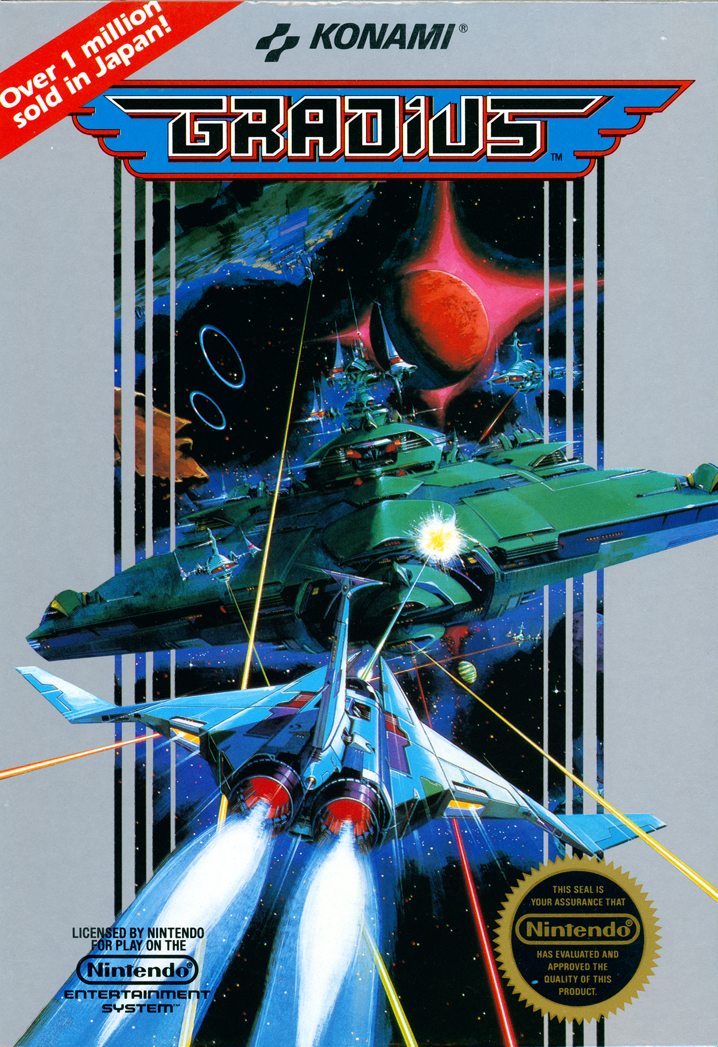
Gradius
- Konami, 1986 -
SCORE: 72 out of 100
SUGGESTED PLAY, BUT DIFFICULT! An influential, space shooter (SHMUP/STG) by Konami from 1985 that introduced a number of key, modern conventions that are still seen in the genre; its NES version from 1986 gifted the world the famous Konami code
[REVIEW|+ VS. -|IF YOU LIKE...|SECRETS & TIPS|FINAL SCORE|BREAKDOWN|MISCELLANEA]
Making The Grade
In this intergalactic shooter, the citizens of the planet, Gradius, send out a sole fighter pilot in the vaunted Vic Viper (or Warp Rattler) ship to fend off the advances of the aggressive Bacterions. Does Gradius (the game) push the genre into hyperspeed and upgrade the strides made by fellow, standout SHMUP, Xevious... or does the NES version degrade the progress already made in the genre?
Since ancient times, humans have looked to the night skies, captivated by those tiny, twinkling glints of light. Beckoning, imagining... from constellations, weaving tales of mythological proportions; to religious inspiration; to their dependable nature, giving rise to accurate calendars and predictable seasons; to steadfast comfort and guidance in travels... the stars have always been constant companions, emanating hints of something much bigger than life here on Earth. With such wonderment and reverence, staring across that vast Milky Way, one could only dream of other planets—just like our own.
Somewhere out there... there is another planet similar to our own. And so goes the story of Konami's, Gradius.
According to its NES (Nintendo Entertainment System) release's instruction manual:
"The planet Gradius, a peaceful Earth-like world, is now under all-out space attack from their old nemesis, beings from the sub-space star cluster of Bacterion. The people of Gradius are in danger of being completely destroyed by the amoeboid Bacterions. ..."
Most early entries in the SHMUP category of gaming (short for SHoot-'eM-UP; it can also be used interchangeably with shooter or STG (the popular abbreviation for ShooTing Game in Japan)) lacked plot, deep backstory or world-building, like what was seen in the grand space operas and sweeping, sci-fi serials of the era. Still, Gradius' efforts were valiant.
However, much more notable inspiration was absorbed from the excitement and action of the dogfights seen across those alien galaxies and the sleek, spaceship designs sported in those cinematic campaigns.
 A long time ago in an arcade far, far away. . . .
Gradius—as well as dozens of other SHMUPs—can trace their lineage directly back to one, momentous title.
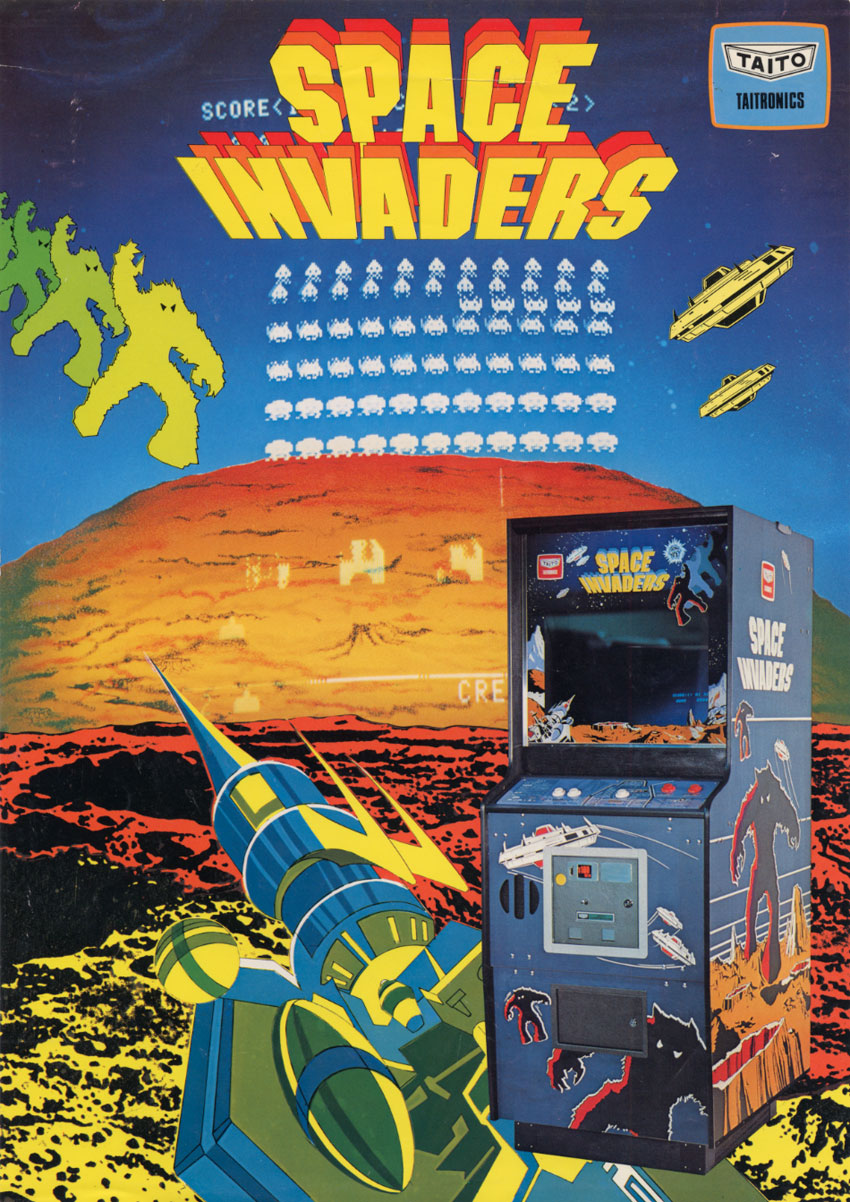
Space Invaders (Taito, 1978) invaded many social gathering spots of the late 1970s and early 1980s (restaurants, pool halls, bars, pizza parlors, convenient stores, laundromats... and even, [GASP!] arcades!).
Likewise, it invaded the headspaces of new gamers, as they obsessively maneuvered their "missile launcher"/"laser base" to-and-fro, blasting away each advancing row of abstract, alien attackers to their hearts' content (and to the coin-jingling joy of the arcade cabinet or "sit-down" cocktail table owners' bottom lines!).
Its cultural impact is undeniable; it became the first bonafide, arcade hit, establishing ideas taken for granted now—like the storage and saving of high scores and continuous gameplay.
Its point of impact was felt even deeper in the creation of a new genre—specifically, the space shooter.
Space Invader's fixed shooter, breakable defense barriers and vertical orientation would light the fuse that would blaze a number of hotspots along the burgeoning genre's timeline. (To see a list of some of the other bright flashpoints in the early timeline of the SHMUP, check the table below. (↓))
Early, Major Contributions To The SHMUP* NOTE: The games below refer to the arcade versions, except where noted.** NOTE: The game images below (↓) only show the NA (North American) region artwork due to space constraints. |
|||
|---|---|---|---|
| GAME | COMPANY | YEAR | INNOVATIONS |
 Space Invaders |
Taito | 1978 |
|
 Asteroids |
Atari | 1979 |
|
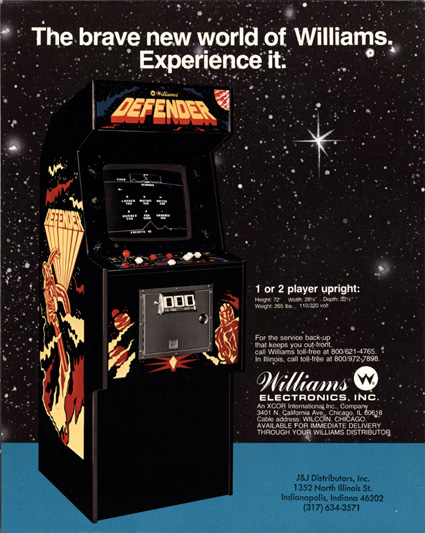 Defender |
Williams Electronics | 1981 |
|
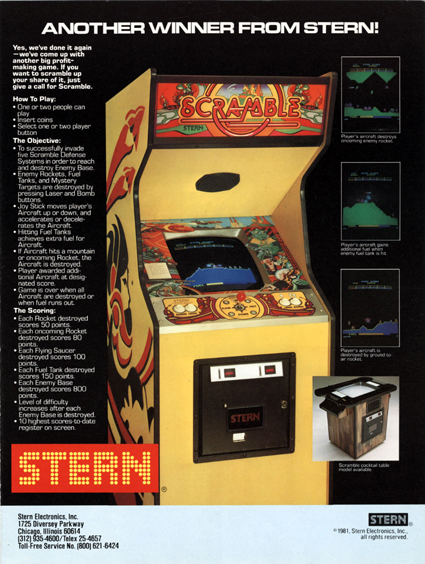 Scramble |
Konami | 1981 |
|
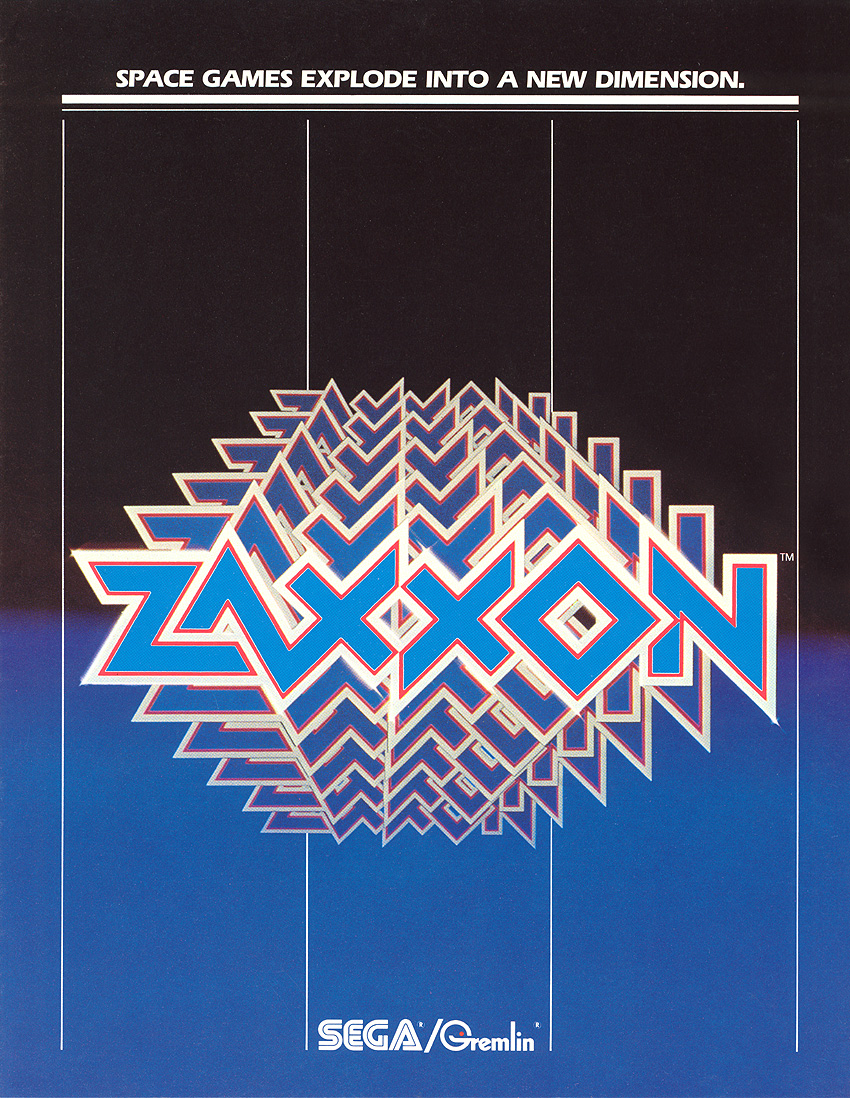 Zaxxon |
Sega | 1981 |
|
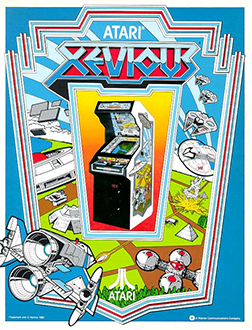 Xevious |
Namco | 1983 |
|
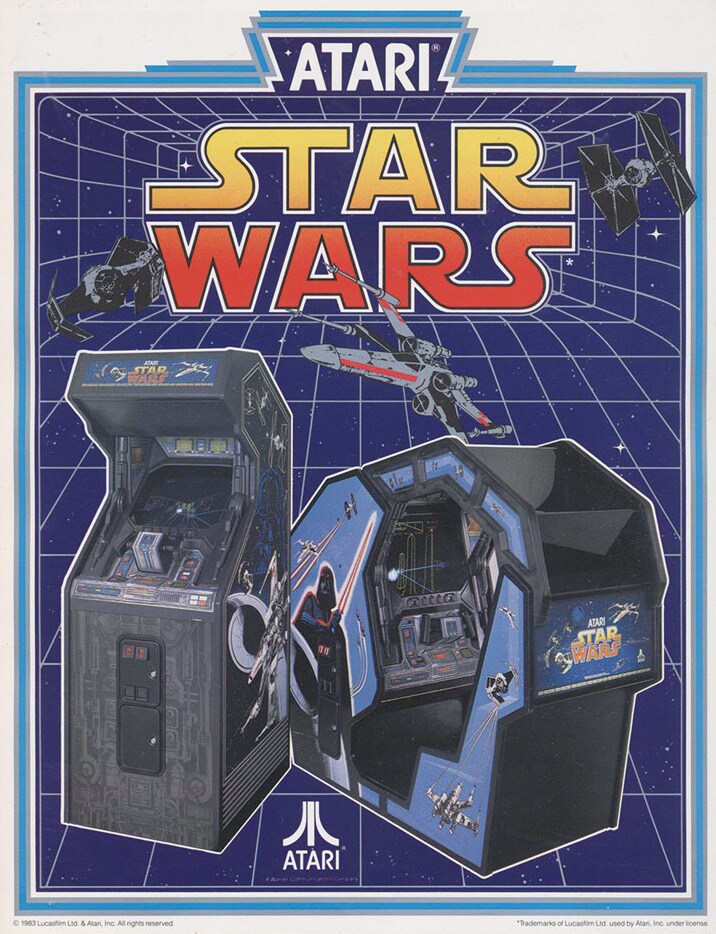 Star Wars |
Atari | 1983 |
|
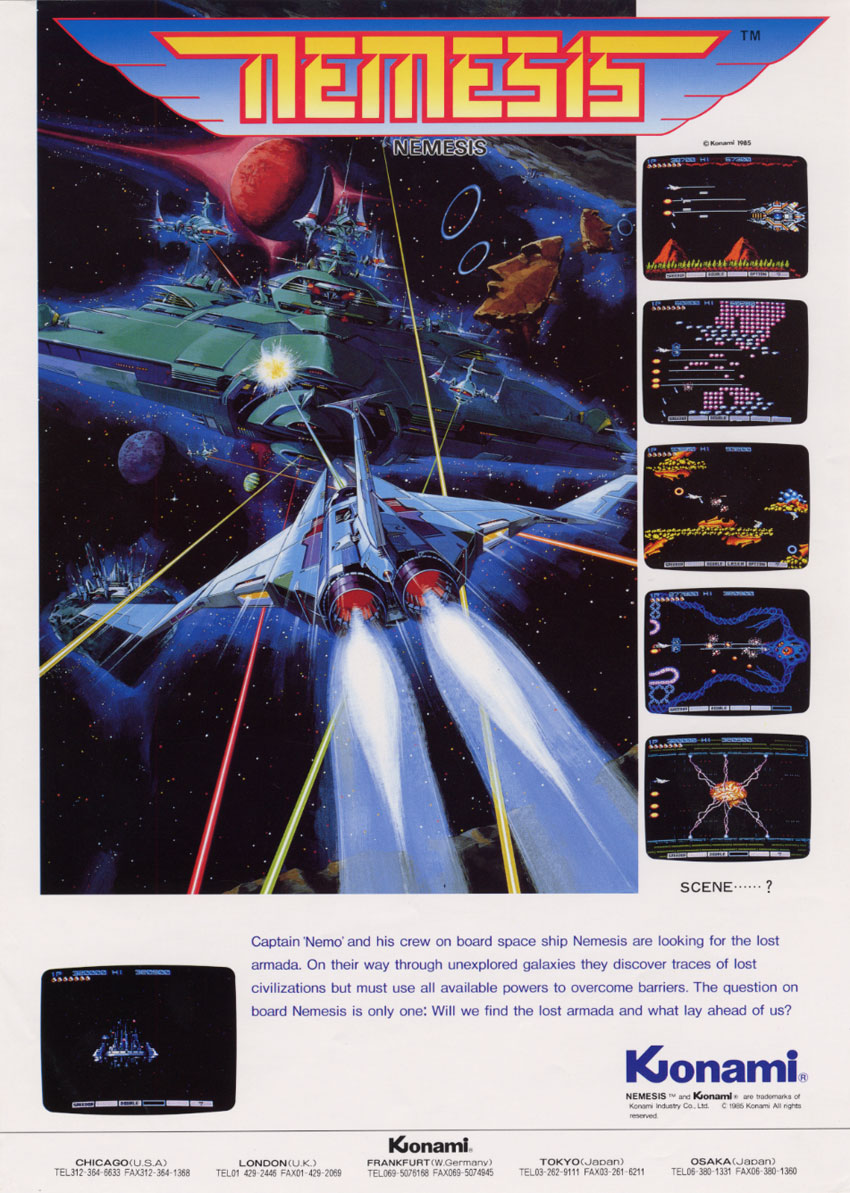 Gradius/Nemesis |
Konami | 1985 |
|
The Space Race
Incremental changes to Space Invader's addictive formula would take root over the next few years.
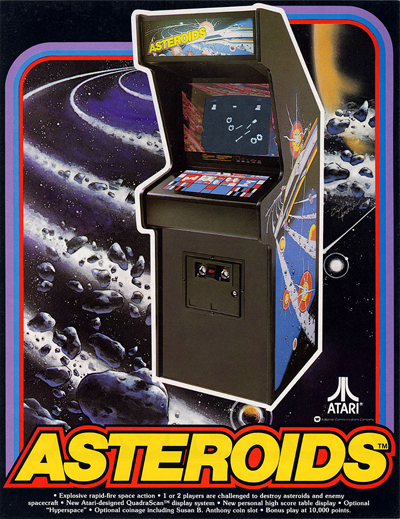
In 1979, Atari's Asteroids would snip the invisible tether and allow for free movement and full 360° attacking across a vector field of crumbling asteroids.
In 1981, Williams Electronics' Defender would introduce horizontal play with flashy, iridescent, lined displays.
Debuting only a few months later, Konami would lay down foundations that would not only expand the SHMUP further, but that would serve as an impetus for its future landmark title: Gradius.
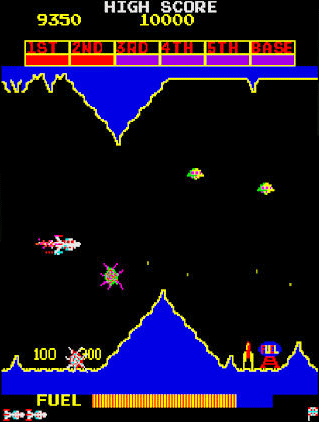
In 1981, Konami's Scramble took its early flight, so that Gradius could soar by 1985—taking inspiration from everything from horizontal flying and forward shooting beams and missiles with downward trajectories to hazardous landscape features that could cause fatal crashes.
However, despite its key innovations (like its forced scrolling play, double attack for ground and flying targets, time/fuel management system and environmental hazards), Scramble would be left in the vapor trails of Namco's groundbreaking, 1983 release, Xevious.
Under Masanobu Endō's guidance, Xevious would modernize and essentially, create a template for future SHMUPs, much as Space Invaders did just a few years prior.
From that first sight of the exciting illustrations affixed to the sides of the cabinet that captured the game's spaceship, the Solvalou, in intergalactic action, arcade fans could not resist the urge to see what all the buzz was about.
Xevious would enjoy a cult-like level of success (especially in Japan), not unlike that of Space Invaders. Anchored by an engaging backstory, the player would pilot the Solvalou over a strangely-familiar landscape that brought the action to an Earth-like setting—a first.
Borrowing from Scramble's dual attack mode, the player had to divide his/her/their attention between ground targets and aerial fighters—each with unique designs (based off of popular spacecrafts seen in sci-fi and other sources).
Each type of enemy vehicle had distinct behaviors that would eventually adjust or adapt to the player's skill level—a significant advancement in enemy design and AI (artificial intelligence) that would go on to be known as "rank" or "ranking" among SHMUP fans.
An actual main enemy (the Andor Genesis mother ship) would await the Solvalou for a series of confrontations.
Introducing so many fresh concepts, Xevious thrusted the genre light-years ahead, and left many developers scrambling to try to mount their own successful assaults on the senses of the eager, arcade goers.
How would Konami top this effort?
From XevIOUS to GradIUS
As you recall, Konami made a promising foray into the arcades a few years back with Scramble. Perhaps building on that shooter's success, the company could piggyback with a sequel.
Back to the drawing board and inspired by the achievements of Xevious, Konami was hungry for a healthy slice of the arcade market. Machiguchi Hiroyasu was chosen to lead a team in development for the would-be follow-up.
Buzzing with fresh ideas and eager to see those arcade aspirations realized—and maybe even surpass Xevious, early on, the project morphed into something different. While retaining some of its foundational elements (like keeping the treacherous terrain that would cause plane crashes and instant destruction upon contact and holding on to the ability to fire multiple projectiles at the same time), any notions of a Scramble 2 failed to take-off or even leave the hangar.
Instead, all sights were turned onto Xevious with the hopes of not only catching up to it, but soaring above and beyond.
To boldly go where no SHMUP has gone before!
Hiroyasu's team made sweeping innovations to the genre to work to this end.
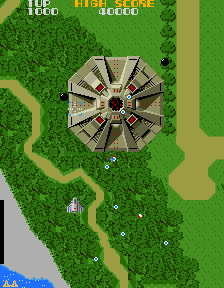
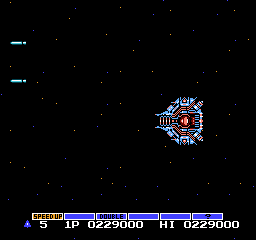
Xevious' Andor Genesis and Gradius' Big Core, both are mammoth, metal, fortified, flying structures of alien war technology that are repeat offenders that block our heroes' progress. One special detail about the core ships from Gradius, though, is that they will eventually self-destruct, if the player can survive long enough.
For one, Gradius' visual axis was swung from the overhead, vertical perspective made popular by Xevious, back to side-scrolling, horizontal play again... but with distinguishable stages, unlike the infinite wrap-around of Defender.
Xevious' stages seamlessly merged (with limited disruptions by the Andor Genesis)—its hand-drawn, lush greenery and earthen setting made it harder to discern or differentiate advancement into later stages... there were no striking or exotic, visual signs.
To cut through the non-distinguishable, forested transitions or the equally blink-and-you-miss-it, blank expanses of black space and flecks of stars between areas in Gradius, Konami chose to employ strong, audio cues to signify progression.
Konami challenged its in-house musician (uncredited in the NES ending, but later attributed to Miki Higashino) to compose an extensive songbook to pair up memorable tunes and jingles with key events in the game (i.e., the opening of new stages, boss battles or game over).
Those shorter pieces would sandwich the meatier, more extended themes that played, while traveling across the game's increasingly bio-mechanized biomes.
Now, it would be much easier to see, hear and realize actual progress in the game, which gave the fans at the arcades even more incentive to push forward (and spend more) to see what insidious locale would be scrolling by next from the invading Bacterions.
Of course, in creating such riveting, effervescent songs to take the game to higher places in the STG stratosphere, the development team would have to be on board to match the musical efforts; they would have to be intent on creating distinct levels that felt like unique worlds to stage their battles. And they were.
According to its NES game manual, Gradius boasted some seven, scenic battlefields: The Volcanic Stage, The Stonehenge Stage, The Inverted Space Volcano Stage, The Moai Stage, The Antennoid Stage, The Amoeboid Stage and The Xaerous Superfortress Stage.
In turn, each of these enemy territory outposts ended with a boss fight—a new idea that would be emulated in future SHMUPs. A fleet of spacecrafts, the Xaerous big core fighters, awaited completion of each successive stage—except for the final, two locations.
The Xaerous big core fighter, or sometimes just called the Big Core, was a dreadnought; a seemingly-impenetrable guard ship with laser fire that actually has a narrow, vulnerable tunnel that gives way under fire to expose a central core that will bring destruction upon the vessel.


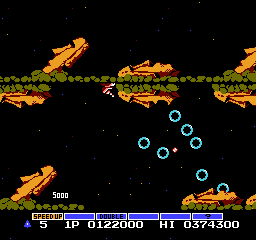
Pictured (above) are the red and blue Enemy Power Capsules, respectively. The red is used for Power Boosting (acquiring special add-ons for the Vic Viper); the blue creates a mass destruction.

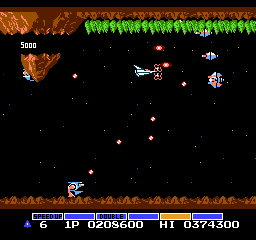
The Power Boost Selection Bar is shown in both its inactive color state (blue) and highlighted indicator color state (yellow). With each additional capsule collected, the next power up to the right is highlighted and selectable; if seven capsules are picked up, the powers wrap around to start over again at SPEED UP.
In comparison, Xevious' Solvalou had its Andor Genesis mother ship, which had a series of weak, structural points that could be targeted to crash the craft and neutralize the threat.
The Solvalou was a formidable spaceship—agile and able to fire off ship-piercing shots, while raining down bunker-busting payload on ground structures—and even had the additional, beneficial ability to reveal hidden targets for bonus points and secret flags (an exciting first in SHMUPs and, perhaps, gaming in general).
How could Gradius' ship (the Vic Viper, also called the Warp Rattler in the NES instructional booklet) measure up?
It did so through a truly genius innovation that transformed the SHMUP from that point henceforth: the power boost selection system!
Instead of just having some predetermined, standard gun or maybe grabbing a random pod containing a special attack, in Gradius, the player is granted the ability to customize and configure the Vic Viper/Warp Rattler as they/he/she sees fit with the following arsenal: SPEED UP, MISSILE, DOUBLE, LASER, OPTION and ?. (The enigmatic choice of using a ? is an unusual choice here. Inside the manual, it is revealed to be a (FORCE FIELD BARRIER), which would prove to be another fresh upgrade idea found in Gradius.)
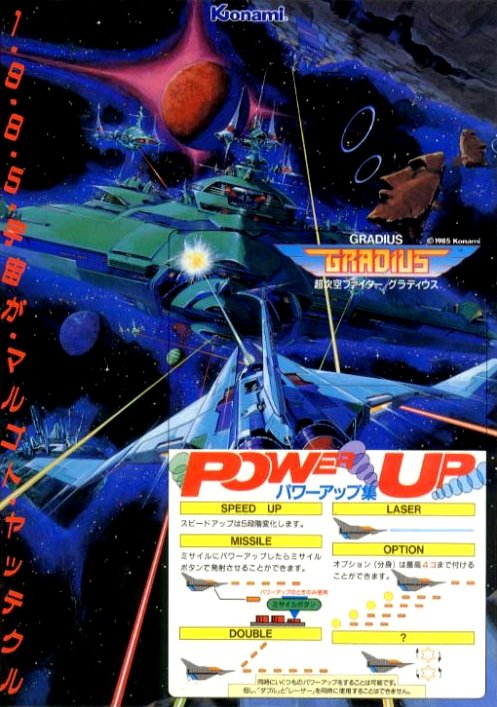
The Power Up System was an original concept for shooters; so Konami introduced another first in the arcades: a third button to use for activating the power up selection of your choice. This flyer from Japan shows it.
With this freedom of choice, though, there comes responsibility: each power-up can be purchased by collecting "red-colored enemy power capsules". To gain these, the player has to shoot special orange/red foes, or successfully strike down lines of enemy flyers near the start of each stage. (As an aside, for every 15th power up capsule that appears on the screen, the next one will be a blue power capsule which will cause a screen-clearing, mass destruction for all enemy forces. (Beware, though, any bullets on screen will still fly true.))
With each new capsule gained, the indicator bar at the bottom of the screen will highlight a different boosted power; once the player builds up to her/his/their desired weapon, pressing B (the power boost button) on the NES game pad/controller will equip it.
This feature gave the gamer a strong sense of strategy and agency with a risk/reward system built in that made the whole experience fun and exciting.
With your own personalized style of play, you could stack several SPEED UP power boosts for the fastest, most nimble ship this side of the sub-space star cluster of Bacterion.
Or you could balance a more manageable speed with air-to-surface MISSILE attacks that would trace the terrain of the ground, while using the DOUBLE beam cannon to, simultaneously, strafe the ceiling at an upward angle and fire straight ahead from the nose cone.
Or for the ultimate upgrade, Gradius' other inventive gift to the STG could be implemented: its OPTION features.
The manual refers to it as:
"Doppel-ganger capability option. This spins off a ghost-like twin of the Warp Rattler, the Sidewinder. The Sidewinder has all the original firepower of the Warp Rattler and follows you in formation during your attacks. You may create a maximum of two Sidewinders."
In clearer language, the OPTION is a glowing, ghostly escort ship that follows your lead. It can double or triple your firepower! (Depending upon, if you have one or two of them equipped.)
For a true force to be reckoned with, though, the Warp Rattler/Vic Viper can be accessorized with SPEED UP, MISSILE, LASER (you can either choose DOUBLE or LASER—not both), the FORCE FIELD BARRIER (capable of withstanding a few shots—mainly up front) and, of course, two OPTION Sidewinders!
The War Of The Worlds
With even this impressive of a loadout at your disposal behind the yoke, thwarting the approach of the Bacterions will still be a great challenge.
Whereas Xevious took place in the familiar settings of Earth, the Warp Rattler/Vic Viper takes off from its Earth-like home base of Gradius to wage its preemptive strike on the Bacterion Empire's super fortress.
To get there, though, you will have to navigate through seven stages that comprise various floating, fragmented satellites, asteroid belts and planetoids—all infiltrated and fortified by enemy forces.
Let's take a brief flyover of the star map of the Gradius universe, shall we?
Each of the game's stages opens to a stirring, musical prelude, calling the gamer to action. Like "Reveille", kickstarting (or kick—startling) soldiers or campers from a peaceful slumber, our Warp Rattler is quickly set to high alert when the emblematic song, "Beginning Of The History (Air Battle)", plays.
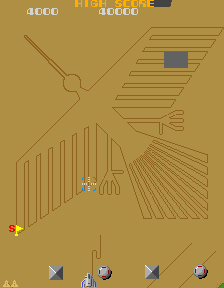
Xevious showcases some of the Nazca line geoglyphs, or intaglios, of Peru. These artistic renderings of specific figures and shapes are etched into the landscapes and visible from high above with some people believing that they are proof of extraterrestrial visitors.
 The Nazca lines of Peru, seen in Xevious, may have served as inspiration for the Konami developers. They included similar signs of extraterrestrial mysteries that confound us here on Earth in Gradius: the Moai statues of Easter Island and even, Stonehenge from England are referenced.
And this establishes a standard pattern that nearly every level in Gradius will adhere to:
opening | main area | mini-boss | boss fight
In this opening, neutral zone, our courageous pilot's voyage through a calm starfield is interrupted, as wave upon wave of advance scout ships ("Fans") in tight formations fly upon the screen, then quickly retreat as if to alert their leaders of your brave approach.
This is where the fun begins; where you begin to learn to experiment with the innovative power boost selection mechanic.
You see, as each of those squadrons of ships speeds in, single file, if you can blast them all, they will leave behind a precious "Enemy power capsule". (Additionally, if you encounter and defeat any red/orange-colored enemies, they, too, will leave behind these same "pulse-energy capsules".) By successfully collecting the capsules, you can begin assembling and equipping the dream build for your Vic Viper/Warp Rattler.
As you start piecing together the best armament for your spacecraft, you will find yourself navigating the main section of the stage. This area is usually designed with one, central theme (e.g. Stonehenge or Inverted Volcano). It rolls through, outfitted with formidable obstacles and most of the Bacterion Empire's deadliest sentry ships and turrets.
After dodging through this gauntlet, the stage will slow to a halt. "Air Carrier" (this iconic track—a triumphant, yet short, four-bar loop—that has a title that is more appropriate for aerial warfare over the seas or oceans than outer space—will be heard throughout future titles in the Gradius series) sets the tone, as the Vic Viper/Warp Rattler is pitted in an endurance test against a mini-boss.
Once time ticks down on this encounter, the final section of the stage pauses at a boss fight—more times than not, a Xaerous Big Core Fighter ship will be involved. Once it is blown up or self-destructs, the cycle will start over anew with the next area.
For a bit more clarity, let's focus our telescopes on each individual stage and observe each one up-close:
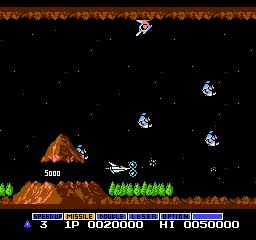
Stage 1 The Volcanic Stage - Described in the booklet as once being a "green and peaceful satellite" that has been "transformed into an inferno-like advance base for the alien Xaerous", your Vic Viper will soar past such gravitational anomalies as a mountain, whose entire midsection has been gouged out, yet its floating peak remains(?!) and a massive, diamond-shaped stone formation free-floating.
This rocky "advance base" is overrun by robotic cannons ("Dakkers") that continuously trot along both the stalactite ceiling and stalagmite floor, jockeying for the best position to pick off your fighter jet.
The Volcanic Stage lives up to its name, presenting the player with the fearsome task of having to survive and dodge randomized, hot rocks spewing forth from the eruptions of not one, but two volcanoes. (Our intrepid, space heroes in video games cannot seem to avoid the perils of space rocks, be they asteroids or expelled magma or molten rock.)
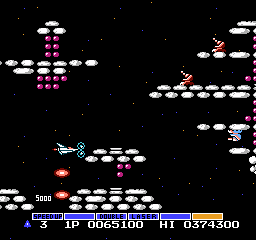
Stage 2 The Stonehenge Stage is more of a ceremonial title, as there is little in the actual design of this "artificially constructed asteroid belt" that resembles the prehistoric site known for its megalithic, stone circle structure.
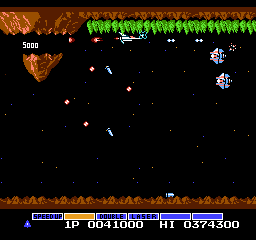
Stage 3 The Inverted Space Volcano Stage - Speaking of what's in a name, this exemplifies that exactly: the game's first stage flipped upside-down with a few minor tweaks, including trees now growing from the ceiling. (Perhaps this was done to help the developers and programmers save space in the game's limited memory, while adding more content.)
Stage 4 The Moai Stage - The iconic Moai statues that are synonymous with Konami are prominently featured here. Upon approach, the heads will open their mouths, regurgitating a rapid succession of glowing "ion rings" that will annihilate your ship upon contact.
When several Moai statues are on screen at once (which is inevitable, due to the slow scroll and their precarious positioning on hovering islands), the game gives strong vibes of an early example of a de facto danmaku or bullet hell—that is, a subgenre of the SHMUP that would later emerge that features complex patterns and/or screen-blanketing shots that require pinpoint movements, timing and dodging to elude.
Slowdown and flicker can appear here. But, whereas slowdown can be seen as an issue in modern gameplay, it serves as a handy tool here—as the Nintendo Entertainment System's CPU cannot quickly process all of the moving sprites on screen at once.
Stage 5 The Antennoid Stage - This "stage" is composed of empty space: no massive land or planetoid features, only wafting Antennoids. These spheroidal, alien monstrosities stretch out their long tentacles to choke out the threat that the Vic Viper has become by either, reaching out and exploding it by mere touch or by shooting projectiles its way. Things can get so hectic in the tight spaces and narrow windows of escape created by them that the game, oftentimes, buckles to a lag-ridden slog that can, in all truthfulness, provide a benefit for dodging for the player.
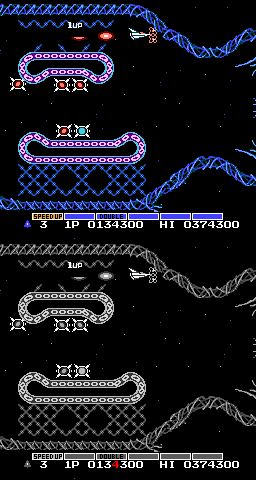
Stage 6 The Amoeboid Stage - This level takes on more of an organic or cellular look than any other stage in the game. A massive, enclosed lattice-work constitutes this stage where aggressive, Amoeba enemies ("Deadly organic antimatter") doggedly and spasmodically pursue the Vic Viper to the level's dead end: a blue nucleus, uterine in shape, that dispenses a steady barrage of shots in a criss-cross pattern until the organism, itself, finally disintegrates, leading an open route into. . .
Stage 7 The Xaerous Superfortress Stage. This defensive stronghold is a fully weaponized, mechanical base of metallic tubing and pulsing lights. Armed with a multitude of cannons, ships and hatches positioned in hard-to-reach areas and an almost constant overrun of encroaching enemies from the rear, this stage makes dodging through the tightest of corners a non-stop, frantic affair.
Can you guide your Vic Viper/Warp Rattler through this last, desperate, aggressive push, and stop the final enemy at the end of this super fortress that is masterminding the invasion of Gradius???
Zooming back out to take a broader view, Gradius plays out like a veritable, pathogenic parade put on and grand-marshaled by the Xaerous superfortress and its belligerent Bacterions. And their idea of a procession is anything, but fun or welcomed—with these particular "floats" (or, better yet, floating stages) filled with Amoebas, Antennoids, Moais and the sordid sort, passing uncomfortably close by.
In this version of close encounters of the first kind, things are a little too close for comfort; but, thankfully, the Vic Viper/Warp Rattler is poised to coil and summon up some of its serpentine-like properties to protect its home planet from intrusion.
The Vic Viper has the might to strike like a pit viper (or likewise, if you prefer, the Warp Rattler can strike like a rattlesnake with Sidewinders (Recall that this is the alternate name given to the OPTION double ship power-ups.)), injecting venomous attacks on the Amoeboid-like Bacterion Empire like a syringe pumping antibodies into the bloodstream or white blood cells rushing in to protect against infection from an unwelcomed germ.
Bringing this review in for a safe landing, Gradius proved to be the successful title in the arcades and on the NES (as well as on myriad other consoles and computers with varying alterations) that Konami had hoped for. As touted on the game's box, the game sold over one million copies in Japan alone.
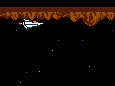
The Vic Viper/Warp Rattler can actually touch the ceiling... just avoid lower hanging rock.
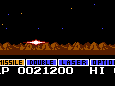
However, scraping the floor will cause instant death.
(On a side note, Konami released Gradius under the name, Nemesis, in a number of iterations in different regions and consoles/home computers. Although a number of publishers and developers have distributed games throughout the years with unique titles in different countries or markets, the decision for the unusual naming convention by Konami is especially confusing in this instance because of the sheer volume of ports released and because of the timing of some releases, slight changes in gameplay of some of the versions and the future renaming and retrofitting of the Nemesis games back into the eventual Gradius franchise.)
From a historic perspective, it is hard not to compare Gradius with its immensely-popular predecessor, Xevious. Xevious became a phenomenon and its impact especially in Japan was huge. But, it is safe to say that Gradius was able to distinguish itself enough to take flight and hit escape velocity to forge its own path outside of the orbit of Xevious.
It accomplished what it wanted, perhaps more than it expected: its innovations and appeal enticed many to climb into the Vic Viper's/Warp Rattler's cockpit to take a test flight and to play with its new toys and experiment with its instrument panel (its power boost selection system, with penetrating Laser beam or Double shot covering a 45° swath of space in front of your ship; that Barrier Force Field offering limited protection, primarily up front; and those originative Options that could triple your firepower [and quintuple it on the arcade and in a few of the game's ports]).
An energetic and dynamic soundtrack pumped through the sound system with much more variety than Xevious' hypnotic cycle of chiming notes walking down the musical scale.
Unique compositions for each stage—uptempo, urgent and catchy with some swinging in odd time signatures—filled the pilots with some extra encouragement and drive to maneuver through some of the turbulence found in game: most notably, a punitive feature of the game that would become known by fans of SHMUPs as the "Gradius syndrome" or "Gradius effect".
Whenever the Vic Viper/Warp Rattler fell in battle, the player resumes play momentarily. However, progress is halted, as the fighter jet is placed in an arbitrary spot rewound some screens back from its earlier explosion (not always at some established checkpoint, like in many other games).
That, in and of itself, would be bad enough, but the Gradius team did not stop there. A hull of its former self, your ship was now stripped of all of its power ups... and usually respawned in a treacherous predicament (most notably in later stages in the midst of overwhelming, unfriendly fire with dexterous, deadly enemy forces rushing in).
Frequently, the heat of battle was too hot, as the Vic Viper/Warp Rattler—now defanged—was left woefully vulnerable (not even retaining the SPEED UP powers it previously had... speed being crucial in helping to dodge).
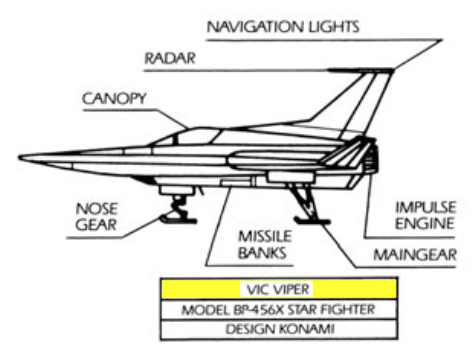
Diagram of the Vic Viper/Warp Rattler.
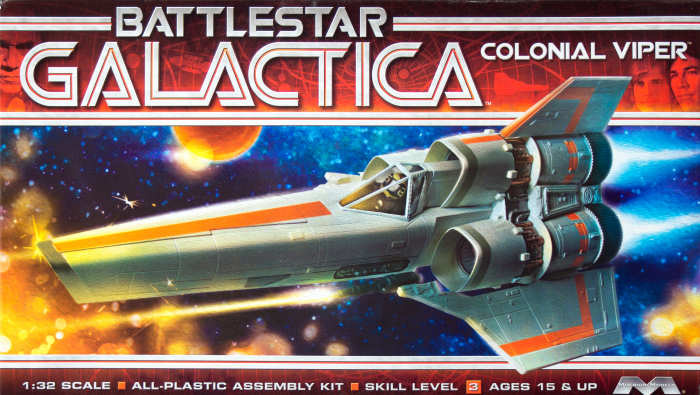
This is a picture of the Colonial Viper from the Battlestar Galactica sci-fi series that originally aired from 1978 through 1979. Perhaps Konami took notice, as maybe this served as an example of heavy inspiration with everything from its name to its distinct, aeronautical construction.
(On a side note: the difficulty curve of Gradius was so steep that it may have unexpectedly helped spur the formation of the "1CC"—an abbreviation for "1 credit clear" or "1 coin clear", which is an accomplishment that many fans of the genre try to reach while perfecting their skills in a game. That is, they try to defeat a game using only one player/ship or coin (depending upon the type of gameplay), which is essentially a necessity in Gradius.)
Falling ill to the so-called "Gradius syndrome", the effects can be so self-defeating and deflating that, oftentimes, simply resetting the game and starting all over again from the beginning, was/is the most viable, best option to rebuild your powerful Vic Viper again from the ashes.
(OR. . . there is a wonderful escape hatch or ejection seat with a golden parachute of sorts, surreptitiously tucked away in the game's programming. It is the inclusion of one of the most famous codes in all of gaming: the Konami code! The NES version of Gradius is the origin of the secret trick. To learn more about it and what it does, click here.)
Despite the crushing loss of your power ups, the game still feels fun enough to pick up again and retry because of the addictive urge to want to outdo your past failures. As you memorize more of the enemy patterns and level designs, you store more knowledge and are more able to strategize how to best lay out your ship's power boosting capabilities for successive runs.
Also, the short time of play to complete all seven stages (less than a half an hour of play for proficient players) encourages replays and practice because it does not take a large commitment of time and can easily be picked up and played for short intervals at the gamer's convenience at home (especially during that era when arcades were prevalent).
Yet another enticement for replay is/was always that ubiquitous, obligatory high score to shoot for... always a sport for thrill seekers who want to see their initials glowing atop the leaderboard... at least, for the arcade cabinets, not this port.
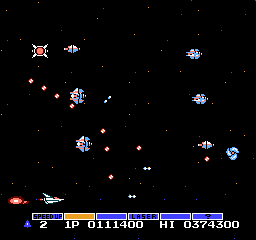
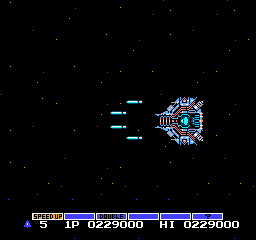
Gradius is known for its high level of difficulty. Pictured here is an instance of the game's internal 'rank'/'ranking' system—whenever your ship is stacked up with enough power-ups and your gameplay is exceedingly successful, enemy ships will begin firing additional stray bullets toward you.
But, score still played a major role in the NES version. Keeping an eye on the individual numbers in the score was particularly rewarding—as a number of hidden tricks and bonuses were tied in with accomplishing certain conditions while a certain digit in the score was displayed. [To see some of these secrets, click here for stage-skipping warp zones or click here for extra ships.] Furthermore, at every 100,000 point interval, additional ships (1UPs) were gained.
While Xevious' Solvalou carried the genre far; Gradius' Vic Viper/Warp Rattler used its warps (another original creation for the genre) to shuttle the SHMUP further along the timeline into an even brighter future.
While liftoff in the earlier days of the space shooter may now feel a little rocky, risky and rudimentary by current, gaming standards, Gradius successfully blasted off and still flies high today in its stellar execution of gameplay with solid, stable controls; a strong soundtrack that highlights individual stages and in-game events; and those special features (power boosting, OPTION ships, secret warps and perhaps its greatest mark left on gaming—the famous Konami code!).
So, if you find yourself feeling the need for speed or feeling the urge for some twitch reflex action and a good, old-fashioned, SHMUP dogfight in outer space, perhaps you'd like to battle the Bacterions and see if you can earn your wings in Gradius.
b. jones © 2026
If you like Gradius, perhaps you would like these titles:
- Gradius (Nemesis) various sequels, ports, etc. [NES]
(similar arcade feel and gameplay with multiple, slight differences between all variations)
- Salamander/Life Force [arcade, NES, PC ENGINE, SEGA SATURN, PLAYSTATION, PSP, various computers, etc.]
(a part of the Gradius universe, but not direct sequels; added various improvements and expanded ideas to the series; experimented with new concepts)
- Scramble [arcade, various computers and consoles, XBOX 360; in compilations on PLAYSTATION, GBA, DS]
(essentially, an early prequel to Gradius, influencing gameplay and mechanics in a number of ways)
- Xevious [arcade, FAMICOM, NES, ATARI 7800, GBA, PS, WII, XBOX 360, WII U, PS4, SWITCH, various computers, mobile, in compilations, etc.]
(innovative SHMUP that provided inspiration and healthy competition to build on Gradius' gameplay and design)
- TwinBee [arcade, FAMICOM, MSX, GBA, DS, 3DS, PSP, XBOX 360, Windows, PS4, SWITCH, mobile, etc.]
(a cute-'em up by Konami with similar arcade and shooter feel; also, similar set of power up weapons, including Speed Up, Double shot, Shield and "Options")
- R-Type [arcade, SEGA MASTER SYSTEM, GB, TURBOGRAFX-16, various computers and consoles; in compilations; as ports and 3D remakes; etc.]
(similar arcade and horizontal SHMUP feel with distinct levels, power-ups and its detachable Force Orb feature, probably inspired by the Options)
- Thunder Force II (series) [computer, MEGA DRIVE/GENESIS, SATURN, SWITCH, SWITCH 2]
(similar arcade and space SHMUP feel; distinct levels, power-ups and Option-like CLAW)
- Gley Lancer [arcade, MEGA DRIVE/GENESIS, WII, SWITCH, PS4, PS5, XBOX ONE, XBOX SERIES X/S]
(similar arcade and space SHMUP feel; distinct levels, power-ups and Option-like Mover System)
- Thunder Cross [arcade, PS4, SWITCH, Windows, XBOX ONE]
(very similar feel; power-ups and Options; actually, a Konami title outside of the Gradius family)
- Parodius series [arcade, various consoles, handhelds and computers, mobile]
(similar arcade feel and gameplay; Konami's playful parody of Gradius and its SHMUP stylings with so many other franchises and titles of the company)
- Super Hydorah [SWITCH, PS4, PS VITA, XBOX ONE, Windows]
(similar arcade and space SHMUP feel; distinct levels, power-ups and Option-like System)
- Satazius/Satazius Next [DREAMCAST, SWITCH]
(similar arcade and space SHMUP feel; distinct levels, similar enemy/level design, power-ups and Option-like Mover System)
- Otomedius series [arcade, XBOX 360]
(similar arcade feel and gameplay; Konami's playful inspiration of Gradius and its SHMUP attributes... this time, blending in the unlikely pairing of the otome genre)
Secrets & Tips for Gradius (NES) |
|||||||||||
|---|---|---|---|---|---|---|---|---|---|---|---|
| KONAMI CODE POWER-UP | Gradius has proven to be a challenging space shooter for anyone brave enough to battle the evil Bacterions—even the actual developers test-piloting the game before release. So, to the thanks and relief of everyone involved, Kazuhisa Hashimoto created the world-famous Konami code in this version of the game to help save the day. The Konami code equips the Vic Viper/Warp Rattler instantly with a powerful set of weapons: MISSILES, two OPTIONS and the FORCE FIELD BARRIER. To access and utilize it, pause the game during play and enter the following (↓): ▲, ▲, ▼, ▼, ◀, ▶, ◀, ▶, B, A, START

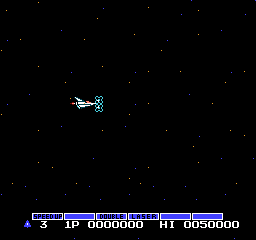
(One additional thing to note: The code can be entered once per game... or can be used once per stage—if the previous stage's Big Core boss is defeated before its core turns red (not by self-destruction, but as a result of the player's attacks).) |
||||||||||
| CONTINUE CODE | If you find flying through all seven stages of the Bacterion Empire on one game is difficult, this code can help your chances without needing to start from the beginning repeatedly. 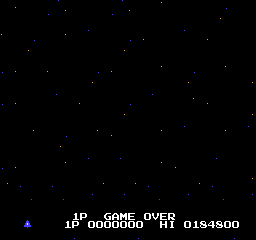 When the "GAME OVER" screen appears above (↑), and before the game ending tune ends, quickly press (↓):
▼,
▲, B, A, B, A, B, A, B, A
To see an animation of the code, place your cursor over the NES Controller above (↑). If the code is entered correctly, the game will start again from the beginning of the last stage your previous game ended on. (The opening title screen will not be seen.) RETURN TO GRADIUS BREAKDOWN - CONTINUES SECTION |
||||||||||
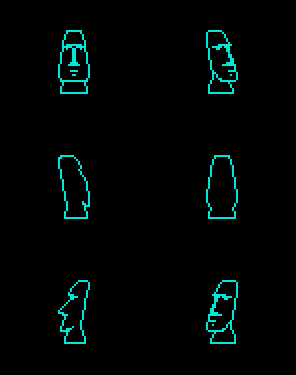
| SECRET WARPS | The programmers of Gradius created a few, hidden ways to help the Warp Rattler live up to its name. By meeting a few sets of requirements on a specific number of stages, you can bypass large expanses of the game. Let's see how below (↓): 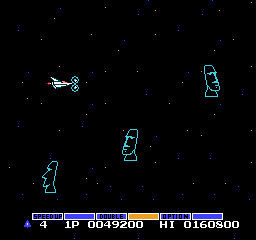 (NOTE: When the warps are activated, the Vic Viper/Warp Rattler will race through a starfield of spinning Moai heads (see above (↑)), upon defeat of the prior stage's Big Core ship. Be sure to avoid touching the Moai or your ship will crash!)
|
||||||||||
| HIDDEN 1UPs | When it is one versus an entire galactic empire, adding 1UPs to the Vic Viper's reserves goes a long way. Here are a few to find:
(NOTE: To make these 1UPs appear, be sure to fly the Vic Viper/Warp Rattler over the specific locations pictured AND follow any stipulations listed.)
|
||||||||||
| HIDDEN BONUS POINTS | Tallying points for a high score has long been an integral part of the action when playing SHMUPs. In Gradius, reaching certain scores will, also, nab you 1UPs. To get there faster, there are a few places that hide bonus points in the game. Let's see where (↓):
|
||||||||||
| BOSS SELF-DESTRUCT | For such a warlike force trying to take over the universe, it is ironic that the Bacterion bosses in Gradius are susceptible to a pacifistic approach—that is, if you are able to survive a fight with the Big Core ships at the end of most of the stages for a prolonged period, they will actually self-destruct. This will work on the final, nucleus-like boss at the end of Stage 6 - The Amoeboid Stage, too. Finally, the game's last encounter cannot actually be attacked, but will still be destroyed when the final stage self-detonates. |
||||||||||
| SECRET RAPID FIRE | Having a way to boost your firepower in Gradius—by any means—is appreciated. Did you know that there is a little-known way to attain rapid fire? 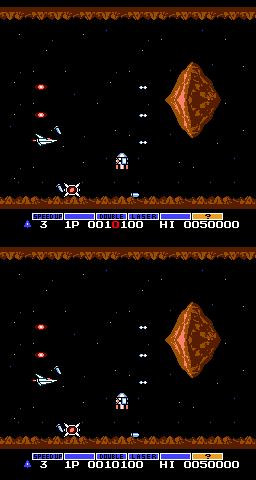 To make this special trick work, three things must be at play:
When all three conditions are met, collect the red Enemy Power Capsule. Now, if you hold down on A (the trigger button), your Vic Viper/Warp Rattler should automatically fire at a faster rate. |
||||||||||
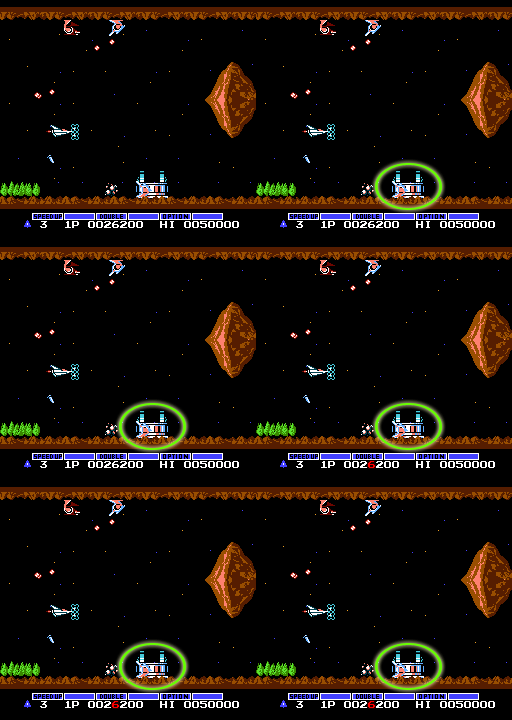
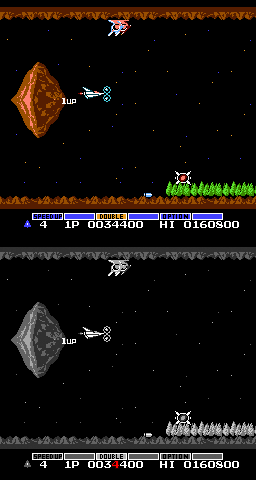
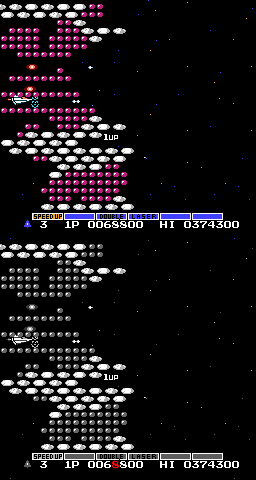
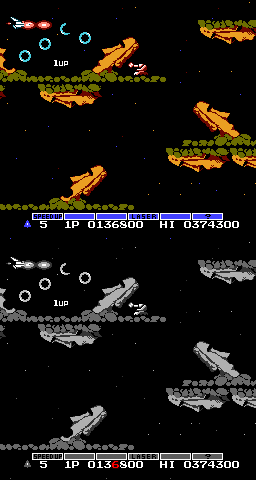
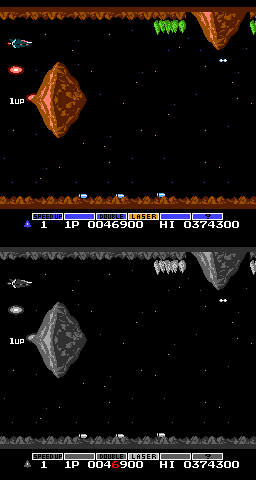
| SECRET 10000 BONUS POINTS | By slightly altering the SECRET RAPID FIRE trick, there is a way to tack on a robust 10000 points to your score. 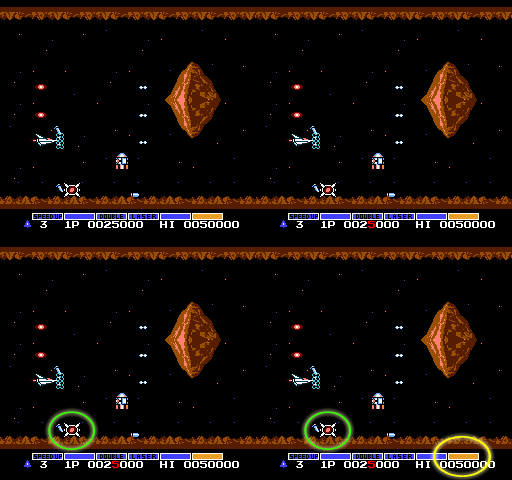
To make this special trick work, three things must be at play:
When all three conditions are met, collect the red Enemy Power Capsule. Now, if you check your score, you should notice an increase of 10,000 points! (Notice the score below (↓). For comparison, check the prior screenshot above it (↑) to see the previous score before the trick was accomplished.) 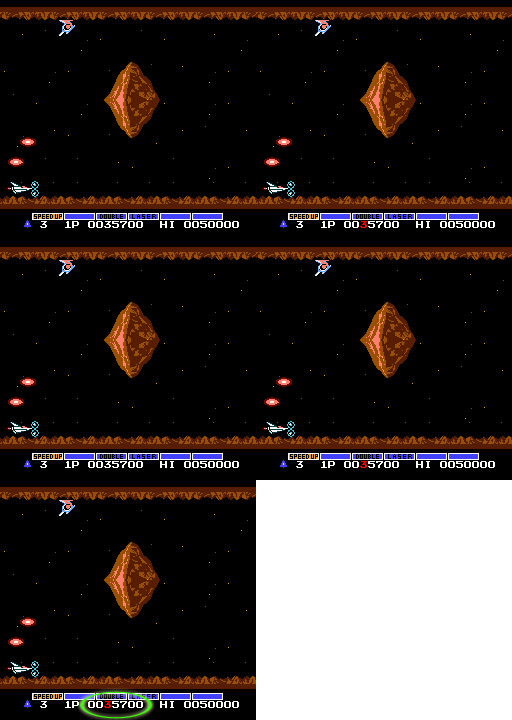
|
||||||||||
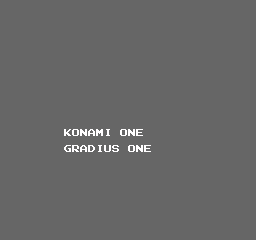
| HIDDEN MESSAGE | To see a secret message display across the screen, press and hold the B and A buttons on Controller 1 during the opening title screen. While still holding down those buttons, press RESET or POWER on the Nintendo Entertainment System to turn the game off, then back on. 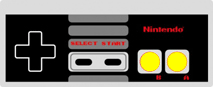
POWER
or RESET
↓
|
||||||||||


FUTURE ADVERTISEMENT PLACEHOLDER.
This area will feature a rotating banner for advertisements.

If you'd like to advertise on our site, please contact us here. Think big, dream bigger!
CONTACT & SOCIAL MEDIA.
We are interested in what our visitors have to say. Please click here to share/e-mail any comments,
suggestions or feedback.


Being the social butterfly that we are, you can like us on Facebook, follow us on Twitter and Pinterest, and watch our video list on YouTube! (Soon, we'll be adding a blog with polls.)