| Title |

Gradius |
| Company |

Konami |
| Developer(s)/Designer(s): |
not listed |
| Composer(s)/Musician(s): |
not listed (but later credited to Miki Higashino) |
| Year: |
1986 |
| Release Date: |
North America - 1985 (arcade)
North America - December, 1986 |
| System: |

NES |
| Genre: |
Shooter, SHMUP/STG, Horizontal, Arcade |
| Ratings/Suitable For Age Group?: |

E Everyone - Mild Fantasy Violence |
| Arcade Version?: |
Yes.
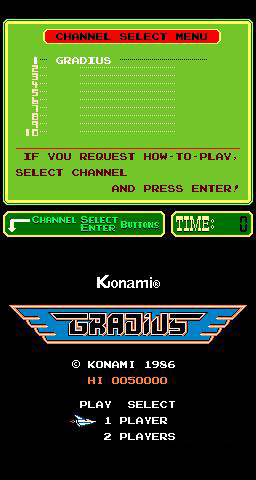
NES version ported as VS. Gradius
-title.png)
and Play-Choice-10
|
| Port To Other Game Systems: |
Yes. |
| Part of Franchise: |
- Original title (first) in Gradius series (also known as Nemesis in some iterations) (arcade, NES/Famicom, MSX, Game Boy, TurboGrafx-16/PC Engine, Sega Saturn, PlayStation, mobile [some services], PC, Wii, 3DS, NES Classic Edition, TurboGrafx-16 Mini, etc. [in compilations])
- Salamander/Life Force (arcade, NES/Famicom, MSX, X68000, Commodore 64, Amstrad, CPC, Spectrum ZX, PC Engine, Sega Saturn, PlayStation, PSP, TurboGrafx-16 Mini)
- Gradius 2 (MSX, X68000, PlayStation, Sega Saturn, PSP)
- Gradius II: Gofer No Yabou (Vulcan Venture) (arcade, Famicom, PC Engine CD, Wii Virtual Console, TurboGrafx-16 Mini, etc.)
- Gradius III: Densetsu Kara Shinwa E (arcade, SNES/Super Famicom, PS2, PSP, PS4, Switch)
- Salamander 2 (arcade, Sega Saturn, PlayStation, PSP, etc.)
- Salamander III (PS5, Switch, etc. [in compilations])
- Gradius IV: Fukkatsu (arcade, PS2, PSP)
- Gradius V (PS2, PS3)
- Gradius Gaiden (PlayStation, PSP)
- Solar Assault (arcade)
- Gradius Galaxies (Gradius Generation, Gradius Advance) (Game Boy Advance)
- Gradius NEO (mobile)
- Gradius ReBirth (WiiWare)
[NOTE: info may be incomplete (information hard to compile due to unusual naming conventions in different regions, and high volume of ports, remakes, reissues and inclusions in compilations or collections; additionally, the gaming systems listed do not express which region or regions a version of the game may appear in)]
|
| Rarity/Availability: |
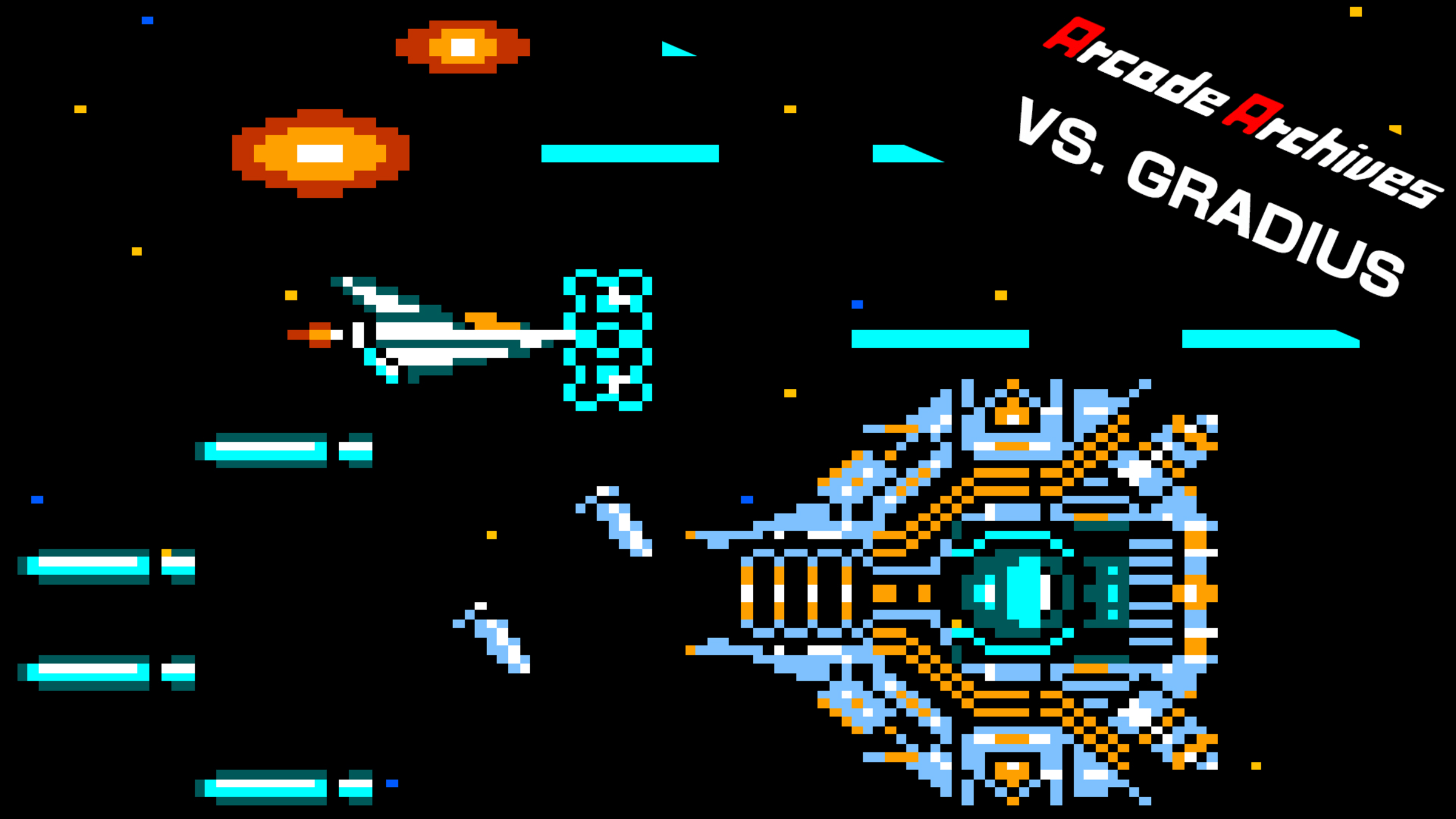
NES version ported as VS. Gradius
and Play-Choice-10
Arcade Archives (Nintendo Switch, PS4)
The NES version is, also, included in NES Classic Edition (Direct port of NES) and

on the Nintendo 3DS Virtual Console
(as a download from Nintendo eShop).

Cartridge is still common and inexpensive (at least, in the St. Louis, MO metropolitan area). |
| Add'l Game System Peripheral Needed To Play?: |
N/A |
| 1 or 2 Player: |
1 or 2 Players (alternating) |
| Number of Reserve Players: |
Start with 3 Reserve Ships |
| 1-Up's |

Yes! Extra ships are rewarded at every 100,000 points, or can be found as 1UPs. |
| Life Meter |
No |
| Password |
No |
| Battery |
No |
| Continue? |
No |
| Perspective/Orientation Gameplay |
2D. Horizontal scroll from left-to-right |
| Number of Levels |
7 Stages |
| Checkpoints? |
None |
| Save points? |
No |
| Uninterrupted Play? |
No (upon ship explosion/loss, the game briefly pauses to a blank screen, then restarts its scroll a short distance back) |
| Internal Map(s)? |
No |
| Score? |
Yes |
| Difficulty Settings |
No |
| Time Limit? |
No |
| Hero |
Warp Rattler/Vic Viper
|
| Sidekick(s)/Cast |
No |
| Weapons |
Power Boost Selection Bar (lists all weapons and upgrades)

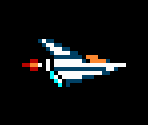 Speed (activating too many SPEED UPs is dangerous; the ship becomes much harder to control) Speed (activating too many SPEED UPs is dangerous; the ship becomes much harder to control)
 Missile (will trace the ground until it strikes an enemy target) Missile (will trace the ground until it strikes an enemy target)
 Double (Double Beam [can either equip the Double or Laser, not both) Double (Double Beam [can either equip the Double or Laser, not both)
 Laser (Laser [can either equip the Laser or Double, not both) Laser (Laser [can either equip the Laser or Double, not both)
 Option (Doppelganger, firepower capability, also referred to as the Sidewinder; can have two of them) Option (Doppelganger, firepower capability, also referred to as the Sidewinder; can have two of them)
 ? (Force Field Barrier; can withstand a few hits upfront, will turn red when only one more hit can be taken) ? (Force Field Barrier; can withstand a few hits upfront, will turn red when only one more hit can be taken)
|
| Items/Equipment |
|
| Power-Ups |
 Red Enemy Power Capsule (Collecting these allow the ship to add upgrades, or to power boost or power up) Red Enemy Power Capsule (Collecting these allow the ship to add upgrades, or to power boost or power up)
 Blue Enemy Power Capsule (Mass Destruction, exploding all enemies onscreen upon touch) Blue Enemy Power Capsule (Mass Destruction, exploding all enemies onscreen upon touch)
 5000 Bonus Points (Rewarded when found [usually hidden onscreen and appears if ship flies over the spot]) 5000 Bonus Points (Rewarded when found [usually hidden onscreen and appears if ship flies over the spot])
|
| Power-Downs |
No |
| Main Enemy |
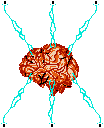
Xaerous Superfortress Brain
|
| Person/Place Being Saved |
The planet, Gradius |
| Objective/Goal |
Save the planet, Gradius; destroy the invading Bacterions |
| Ending? |
Yes |
| Secret Code(s)? |
Yes |
| Stage Select |
No |
| Invincibility |
No |
| Extra Players |
No |
| Continues |
No, but can be accessed by secret code
(Click here to learn more about it.)
|
| Sound Test |
No |
| Additional Secret Codes |
? |
| Trivia/Little Known Facts |
- Did you know that the NES version of Gradius was the first game to utilize the famous Konami code?
↑ ↑ ↓ ↓ ← → ← → B A

(To see an animation of the code, place your cursor over the NES Controller above (↑).)
Gradius is so difficult that when developer, Kazuhisa Hashimoto, was converting the arcade game to the NES, he inserted the code to make it easier for testing during production.
This "Konami code" actually can be used to power-up the Vic Viper/Warp Rattler with a potent set of weapons: MISSILES, two OPTIONS and the FORCE FIELD BARRIER.
At any point in the game, the code can be activated while the game is paused. Additionally, the code will work once per stage, if the previous stage's Core boss ship is defeated before its core turns red.
The "Konami code" is so well-known that it is has been added to, not only, a number of other Konami games, but also, other companies' video games and even in other pieces of media!
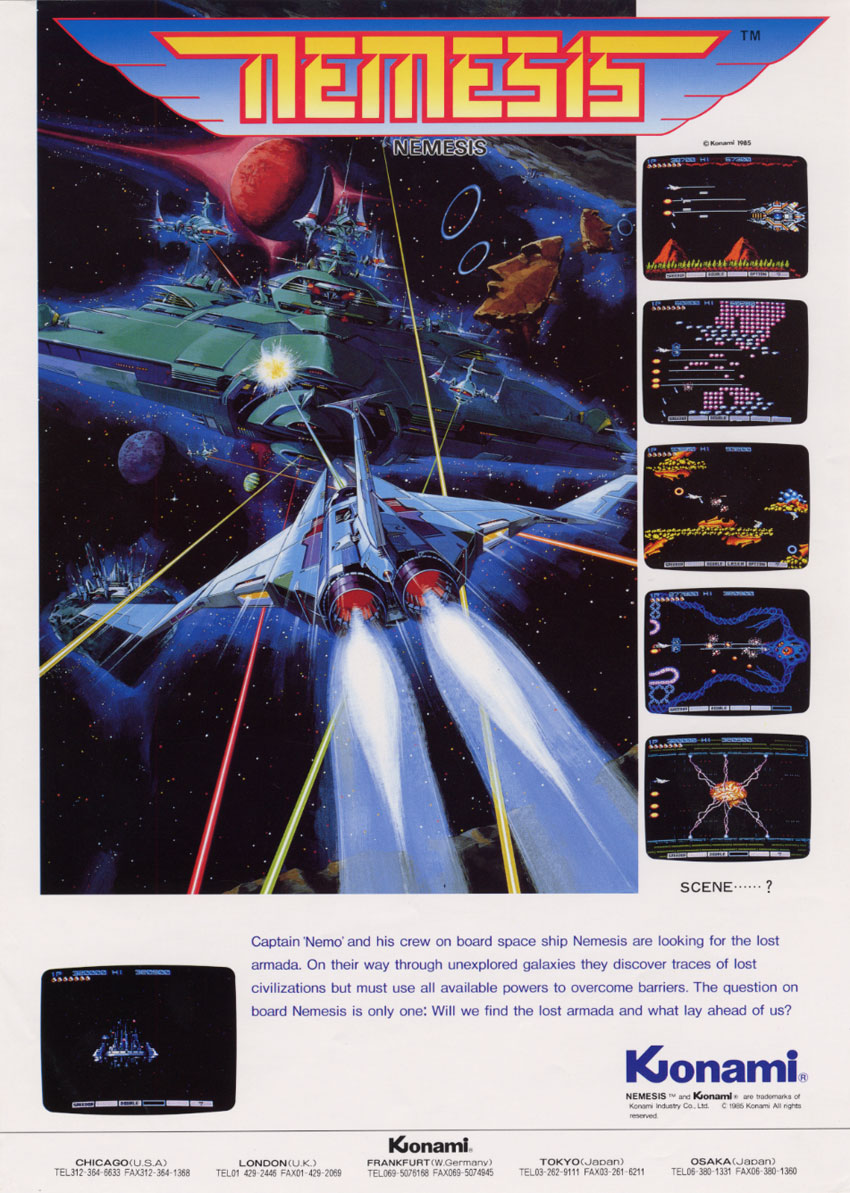
- Upon its arcade release, the naming convention has been confusing for Gradius. The MSX computer port from July 1986 in Japan and Europe was known as Nemesis. North America and the United Kingdom received an arcade cabinet called Nemesis. Nemesis was the name for the Game Boy release worldwide, as well. To further confuse things, there were slight differences in several of the various Gradius and Nemesis titles.
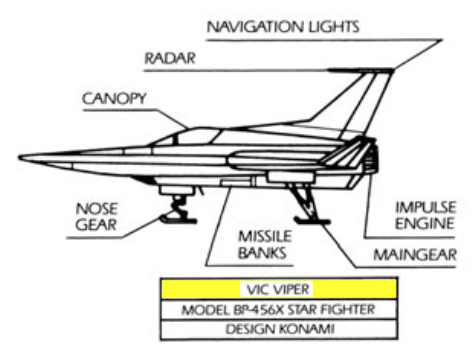
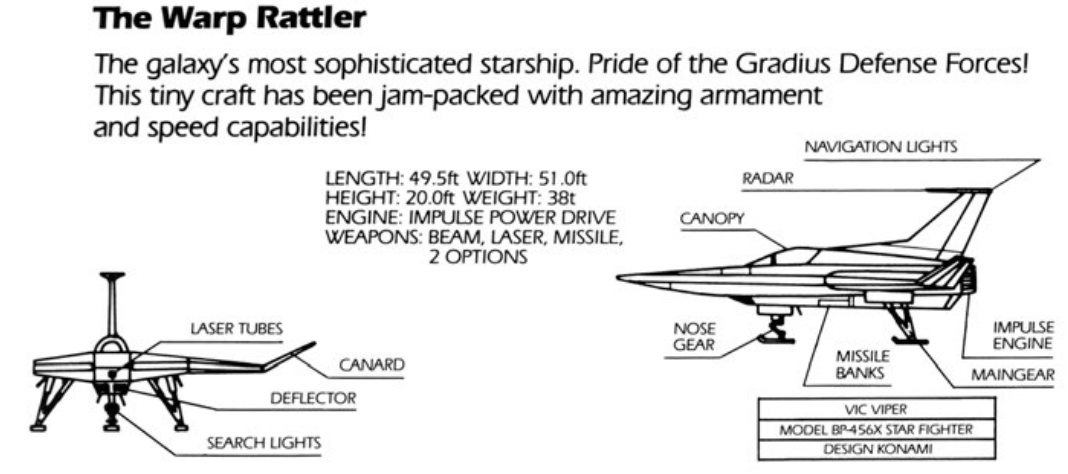
- Gradius' ship, the Vic Viper, is well-known in the annals of the SHMUP genre. But, the North American NES manual refers to it as the "Warp Rattler" frequently.
However, in one illustration, it is labeled as VIC VIPER.
(Note the yellow highlighted area for name):
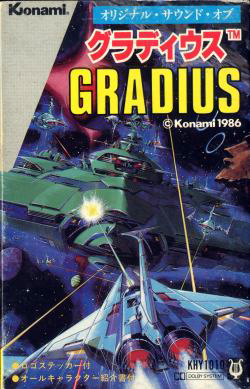
- To help commemorate one of the major contributions that Gradius bestowed upon the SHMUP genre—the addition of a full, diverse soundtrack to complement the different stages of a game—Konami actually released an audio cassette in Japan.
Titled Original Sound Of Gradius, Miki Higashino's standout music could be purchased and listened to by fans way back in 1986!
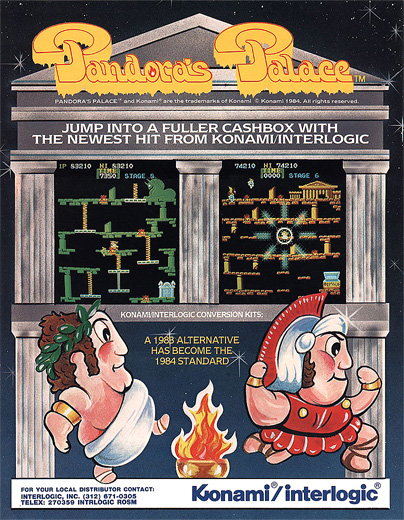
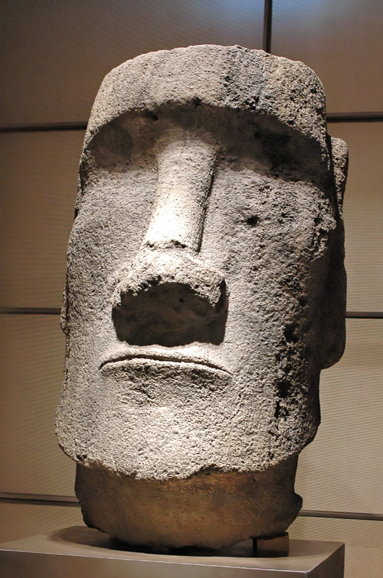
- Gradius was actually not the first Konami game to feature the Moai. That distinction belongs to the Donkey Kong-influenced, Pandora's Palace from 1984.
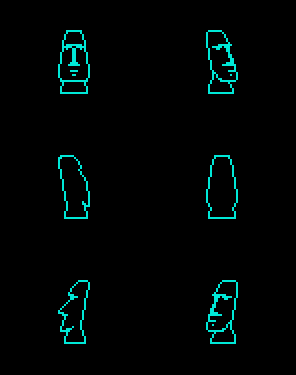
Below (↓) is a picture of one of the Moai head representations seen in Gradius:
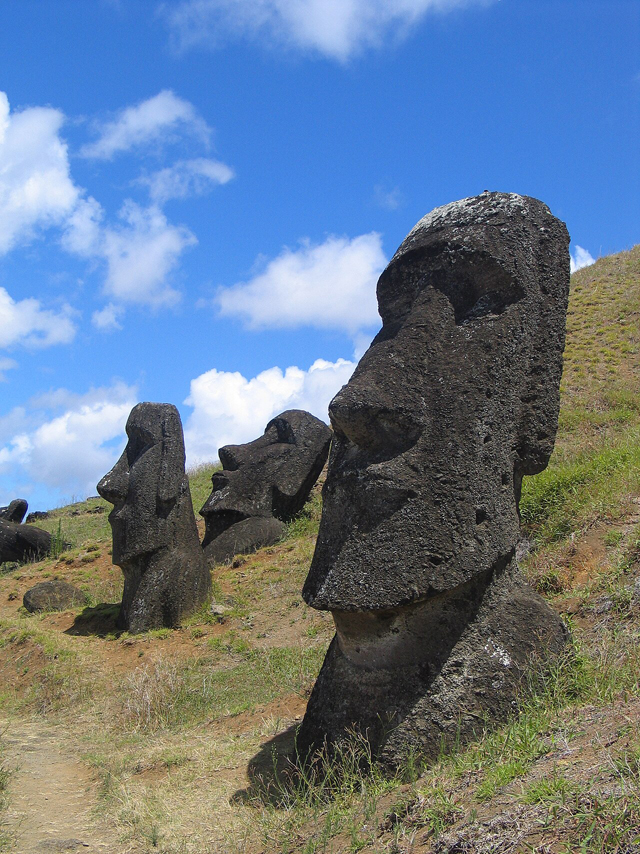
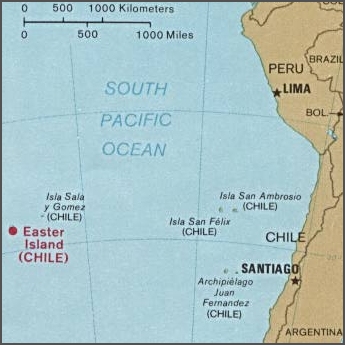
These massive, mysterious, carved, stone statue heads, found on the almost remote Easter Island (originally known as Rapa Nui or Te Pito te Henua by its original Polynesian inhabitants), isolated in the Pacific Ocean—some 2,200 miles/3,540 kms west of the distant coast of Chile—are, essentially, an unofficial mascot of the company.
Over the years, Moai statues have become synonymous with Konami, and have been found in Castlevania, the Metal Gear Solid series, the Parodius series and other games from the company. See below (↓):
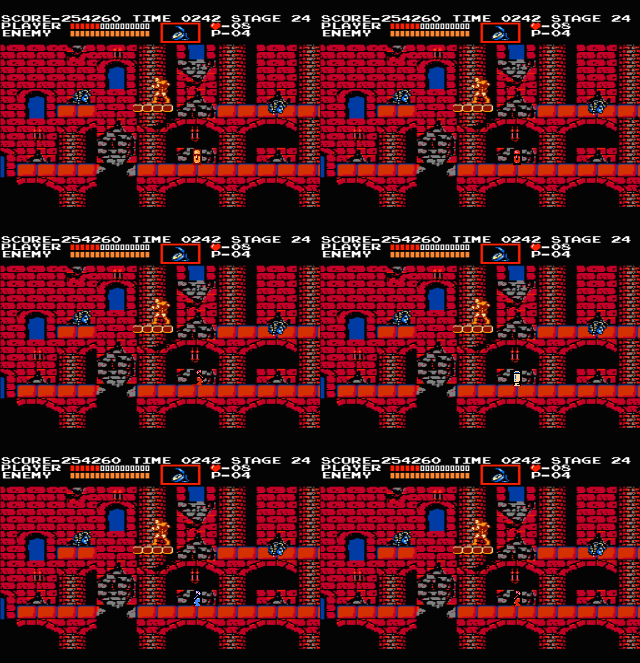
Castlevania (NES)
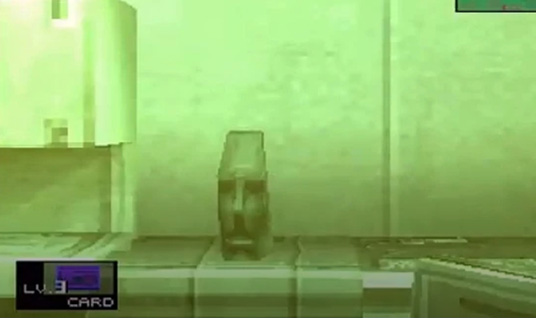
Metal Gear Solid (PlayStation)
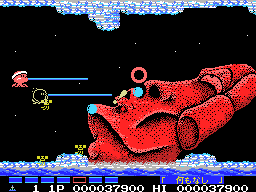
Parodius (MSX)
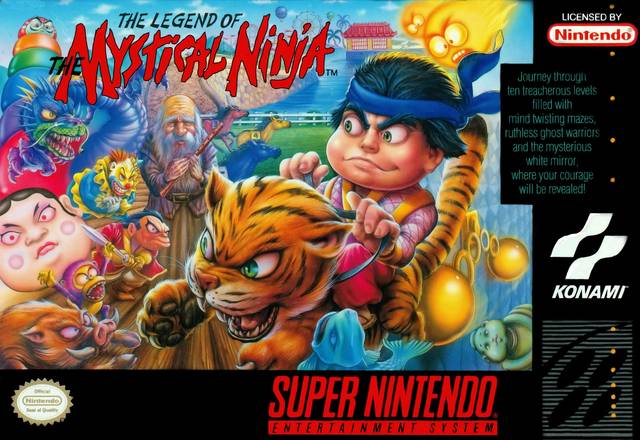
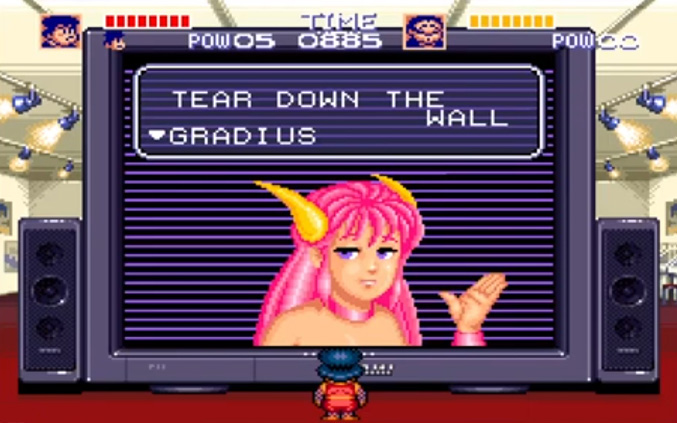
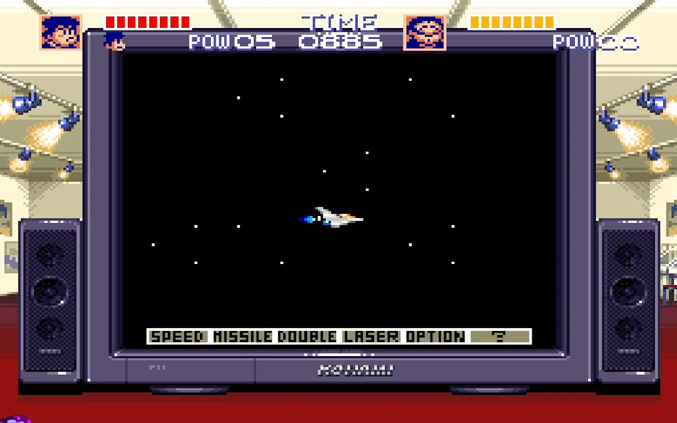
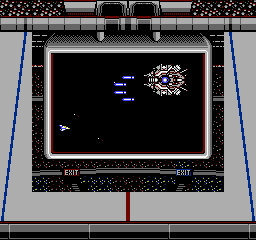
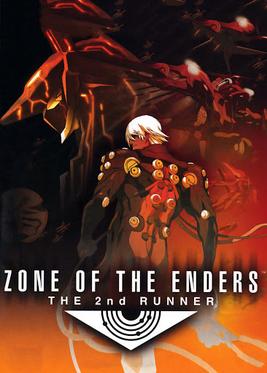
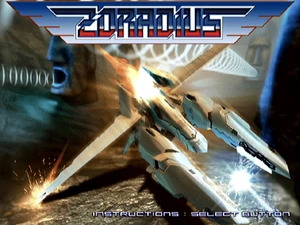
- Gradius has the distinction of being featured as a play-in game contained within, at least, three, unique, Konami titles: Blades Of Steel, The Legend Of The Mystical Ninja and Zone Of The Enders: The 2nd Runner.
In the ice hockey game, Blades Of Steel, on the NES, during the second intermission, the player gets an opportunity to play a brief scene from Gradius. The gamer gets to pilot the Vic Viper and battle against one of the Big Core ships (see below ↓):
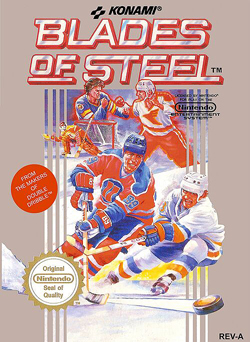 → →
In The Legend Of The Mystical Ninja [Ganbare Goemon: Yukihime Kyūshutsu Emaki in Japan] (SNES), the player gets an opportunity to play the first stage from Gradius (see below ↓):
Finally, in Zone Of The Enders: The 2nd Runner (PlayStation 2, 3 [HD Edition] and 4; Xbox 360; Steam), Zoradius, an unlockable, partial version of the original Gradius—redesigned in full 3D!—can be played (see below ↓):
↓
- Yu-Gi-Oh! is a Japanese manga (comic book), created by Kazuki Takahashi in 1996. It centers around high-schooler, Yugi Motou (Yugi Moto), who transforms into Yu-Gi-Oh, when playing a mystical card game. Elements of Egyptian mythology and character-based cards that involve dueling against evil opponents are present.
As Yu-Gi-Oh!'s popularity surged, it branched out into a lucrative franchise worldwide. Fans enjoyed animated shows, video games and various merchandise—especially, the rise of a trading card game, launched by Konami in 1999 in Japan, originally, as the Official Card Game.
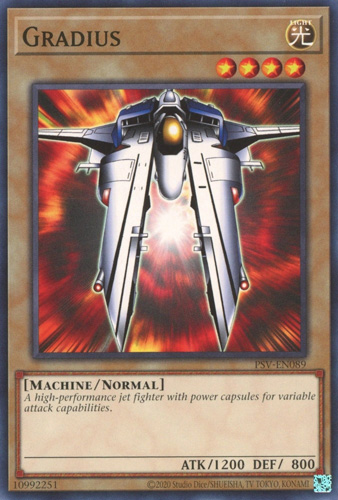
Interestingly enough, Konami actually created a few cards based on Gradius:
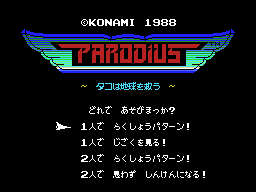
- Heavily inspired by Gradius, Konami has created another SHMUP series that pokes fun at itself. Parodius, whose name is a portmanteau of parody and Gradius, does just that: it parodies many aspects of the Gradius series in a number of absurd, comical (and even sexualized) manners.
There are five games in the Parodius franchise: Parodius, Parodius Da!, Gokujou/Gokujō Parodius, Jikkyou Oshaberi Parodius and Sexy Parodius.
Parodius on the MSX (1988) [pictured above (↑)] was the very first game in the series—even predating the arcade game, Parodius Da!.
The following games in the series in order of release are:
.png) |
Parodius Da! (this first arcade title in the series from 1992 was ported to a number of consoles, as it took advantage of 16-bit capabilities) |
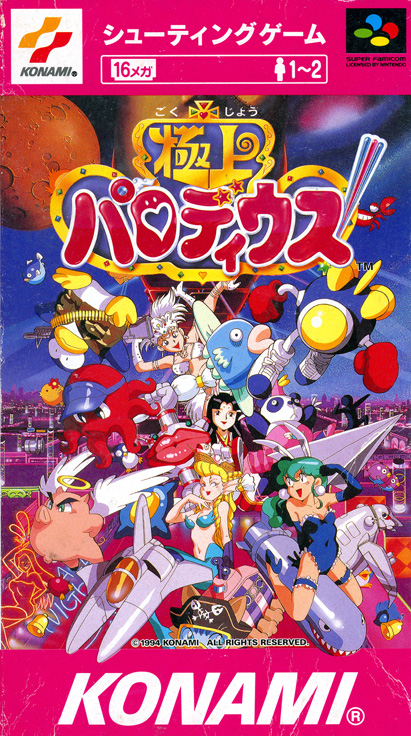 |
Gokujou Parodius (released in 1994, this sequel of Parodius Da! and second arcade title was, also, ported to the Super Famicom in Japan) |
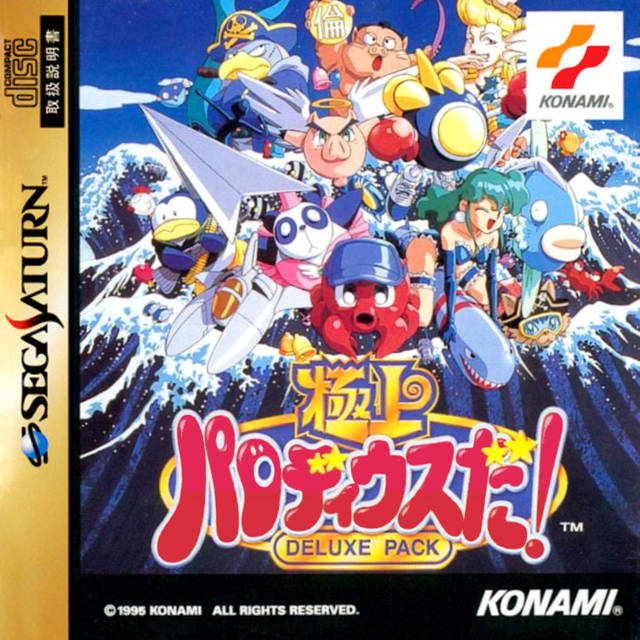 |
Gokujou Parodius Da! Deluxe Pack (not a new game, but a 32-bit compilation of the first two, arcade titles on the Sega Saturn and Sony PlayStation from 1994—only released in Japan and Europe... not the USA) |
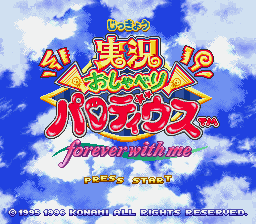 |
Jikkyou Oshaberi Parodius (released on the Super Famicom, PlayStation, Saturn and PSP in 1995 (not as an arcade title), it introduced voice-over commentary and playfully poked fun at several Konami games) |
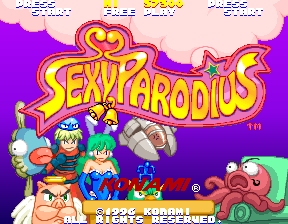 |
Sexy Parodius (the fifth and final game from 1996—featured on the arcade, Saturn, PlayStation and PSP—it was full of suggestive fan service, more challenge and beautifully-detailed graphics) |
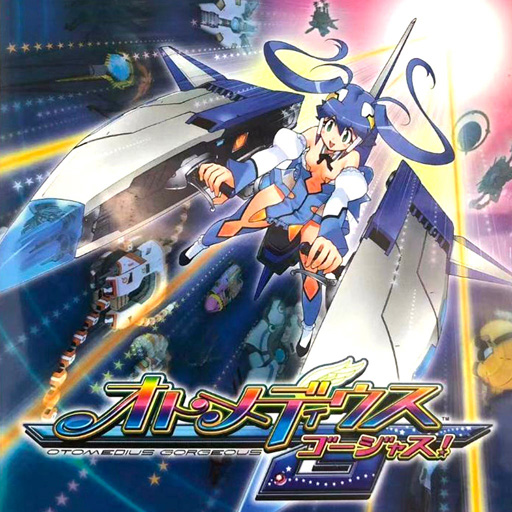
- Just as the Parodius series was inspired by Gradius, Konami playfully modeled a newer, SHMUP series after Gradius: Otomedius.
The name, Otomedius, is a portmanteau of otome and Gradius. (Otome means "maiden". Games in this genre, usually center around a main female character, through which the gamer makes major decisions for and who is, oftentimes, involved in a romantic story.)
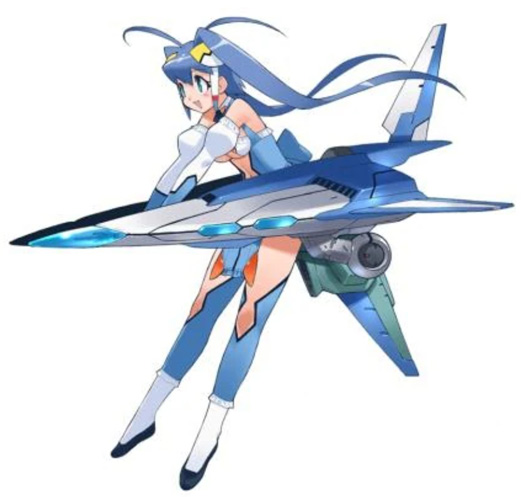
In this set of games, Gradius is not necessarily parodied; instead some of its core, horizontal shooter traits (like its power up selection, power up capsules, certain sound effects, Core Fighter ships and surprisingly more) are blended with aspects of otome games (particularly, the majority female cast, however, young and outfitted in risqué attire).
In the Otomedius series, 15-year-old high schooler of the St. Gradius Academy, Aoba Anoa, is the main heroine and pilot of the Vic Viper. (Aoba Anoa does not actually sit within a cockpit; instead, she straddles this pint-sized version of the Vic Viper in an unusual, upright stance.)
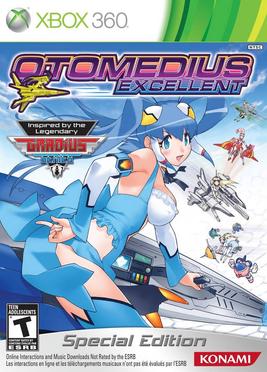
There are three games in the Otomedius franchise: Otomedius (original arcade game), Otomedius Gorgeous! (an Xbox 360 port of the arcade game) and Otomedius Excellent (sequel on Xbox 360). [Note that the cover art to Otomedius Excellent includes a label that boldly says, "Inspired by the Legendary GRADIUS GAMES".]
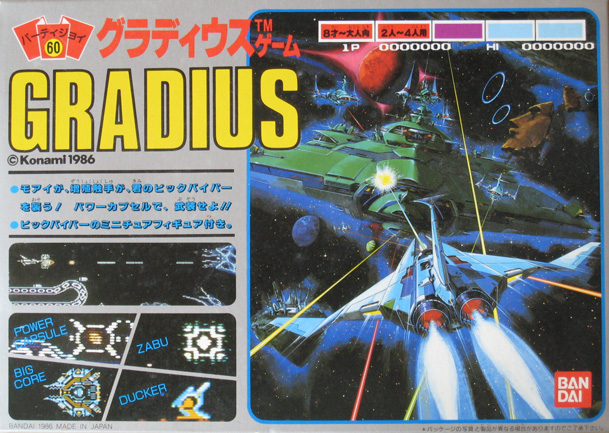
- Gradius' reach goes beyond the video game medium. In 1986, Bandai (also known for video games) published a Gradius board game in Japan. Interestingly enough, in Korea, the game was called Big•Hyper.
RETURN TO TOP
|